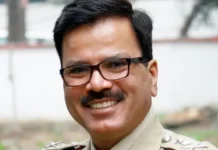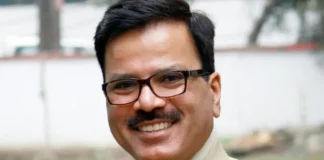
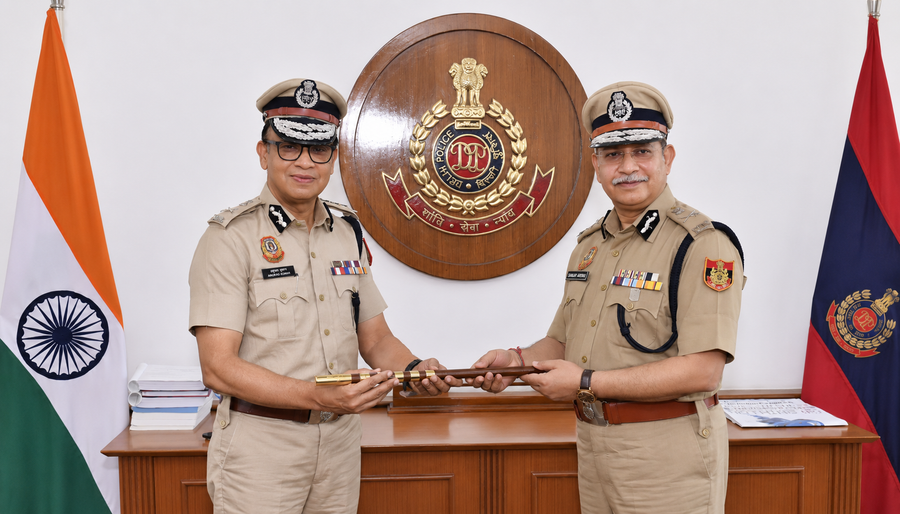
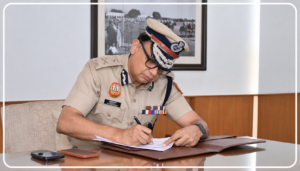
On Thursday, the Appointments Committee of the Cabinet, led by Prime Minister Narendra Modi, cleared the way for Anurag Kumar to be relieved from the Intelligence Bureau and return to his parent cadre. Anurag is a 1994-batch officer. Although he had previously served as a DCP in Delhi Police districts, he had been working with an intelligence agency on central deputation for two decades. He received promotions during this tenure and handled several significant assignments, including a posting in the United States. He has also been honored with police medals, though he has remained away from routine policing duties for a long time.Upon arriving at the Delhi Police Headquarters, on Jai Singh Road on Friday (July 17, 2026), Anurag Kumar was accorded a Guard of Honour in accordance with police traditions. He then signed the documents to formally assume charge as the Police Commissioner. Before departing, Satish Golcha handed over the Delhi Police baton to him. In the photograph, he appeared to be making a futile attempt to smile; indeed, neither officer looked at ease. This was obvious . The abrupt and peculiar manner in which the head of a major organization is sent off tends to create precisely such a scene.
When Anurag Kumar—who had returned to his parent organization after a long hiatus—was appointed the capital’s police chief, the Union Ministry of Home Affairs bypassed the seniority of three IPS officers senior to him: Garima Bhatnagar and Rajesh Khurana (1992 batch) and Robin Hibu (1993 batch). All three hold the rank of Special Commissioner. However, this is hardly a new phenomenon. Such practices have been observed previously as well during the appointment of police chiefs in Delhi and various other states. Initially, this used to be a matter of public curiosity. Such instances were rare, making headlines in newspapers and becoming talking points within political and bureaucratic circles. Critics would argue that those in power handed over the police command to officers who would act like puppets to serve their interests. When the arbitrary sidelining of competent officers for the post of police chief became excessive, the Supreme Court was approached. Although the court mandated a transparent appointment process based on merit, politicians in power found ways to circumvent even those directives. An officer would first be appointed as an acting chief, and subsequently regularized once the grounds for their eligibility were solidified. The recent appointment of the DGP in Uttar Pradesh serves as a case in point.
By now, however, IPS officers have grown accustomed to this practice. Moreover, they have even come to accept the appointment of chiefs brought in from other cadres. Furthermore, to avoid legal complications or the prospect of challenging ministry orders, an officer’s IPS cadre is sometimes changed within a single day. The case of Gujarat-cadre officer Rakesh Asthana becoming the Delhi Police Commissioner is a prime example of this. Whether one calls it a lack of backbone, flexibility, or the result of some form of pressure, the IPS Officers’ Association often maintains silence on such matters. However, aggrieved IPS officers have occasionally approached higher courts regarding such appointments, and in a few instances, they have even secured relief.
The order removing Satish Golcha was executed with such haste that a specific rank or position for his new posting was not even determined. He was simply directed to report to the Lieutenant Governor of Delhi for the time being. Meanwhile, there has been no decision or announcement regarding the officers senior to Anurag Kumar ( set to become the Police Chief) will be posted. Naturally, they would not work under Anurag Kumar, nor would he feel comfortable exercising authority over them. Yet, given the current state of the bureaucracy, even such a scenario would not come as a surprise.