The first day of the festival opened with a session by Sarabpreet Singh titled “A Melodious Preface: Khwabgah – The House of Dreams.” This was followed by a welcome address from Rahul Singh, the festival director and son of the late author and journalist Khushwant Singh. He remembered his father as a man of great discipline who possessed an unparalleled sense of humor.
Gen. Naravane launches ‘KSLF Forever Young’:
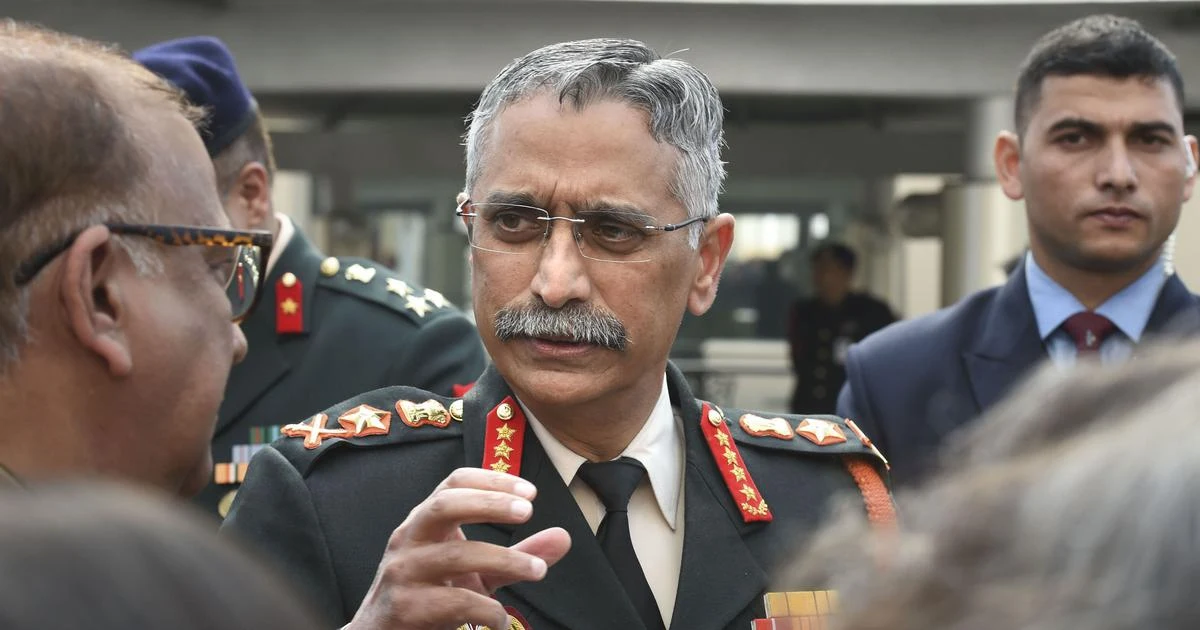
During the event, former Chief of Army Staff, General Manoj Mukund Naravane, launched the ‘KSLF Forever Young’ initiative and shared a special message for young writers. The primary objective of this initiative is to inspire young and emerging writers to engage in creative writing. Addressing the young writers,
Protests are the whistle of pressure cooker:
Responding to a question at an event regarding the ongoing protests in the country, General Naravane remarked that society functions much like a pressure cooker—when the pressure builds up, it is released through the whistle. Therefore, those protesting for their demands should be allowed to do so, as this enables the release of societal pressure. Furthermore, efforts should be made to identify the underlying causes of these protests and find solutions for them.
This question was raised in the context of the current climate surrounding youth-led protests against Chief Election Commissioner Gyan Kumar. These demonstrations—spearheaded by groups such as the All India Students Association (AISA), ‘Cockroach Janata Party’ (CJP), and certain factions associated with the ‘INDIA’ alliance—center on alleged irregularities during the Election Commission’s ‘Special Intensive Revision’ (SIR) of the electoral rolls. The allegations include the large-scale removal of voters’ names from the lists.
General Naravane noted that while several of our neighboring countries have experienced various forms of unrest over the past few years, India continues to progress, and its economy keeps growing. This suggests that we are doing something right. Today, we are advancing toward an economy comparable to China’s, including in the realm of trade. Previously, our defence sector relied heavily on Public Sector Undertakings (PSUs), but the entry of numerous private enterprises into the defence sector has since accelerated growth in this field.
Regarding the Agniveer soldiers recruited under the Agnipath scheme, he remarked that no scheme is one hundred percent perfect. There is always room for modification, and if changes are required in this case, they should be made.
Better to have one old friend than two new ones:
General Naravane stated that one old friend is better than two new ones. Therefore, we should consider which friendly nation has consistently stood by us during difficult times.