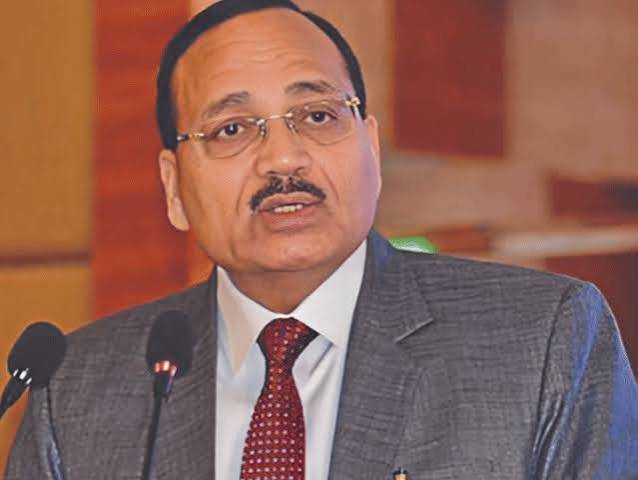
Students from the graduating batch (2026) of the National Academy of Legal Studies and Research (NALSAR) in Hyderabad have stated that they would not like to have their graduation degrees from Justice Surya Kant, the Chief Justice of the Supreme Court of India. A big section of these students have written to NALSAR University, demanding a review of the choice of the chief guest for their convocation ceremony.
The university has a total of 1400 students and about 450 students have written the said letter.
The letter, addressed to the university’s Vice-Chancellor, Registrar, and faculty, was submitted on July 23. Since the date for the convocation ceremony has not yet been finalized and discussions regarding the chief guest are ongoing, the students wants their views to be considered before any decision is made. Traditionally the Chief Justice of India is invited as the Chief Guest on the occasion of a convocation ceremony.
The students’ primary objection stemmed from the response given by the Supreme Court bench led by Justice Surya Kant regarding a petition filed concerning police action against protesters during the “Chalo Sansad” (March to Parliament) rally at Jantar Mantar in Delhi on July 20.
According to the students’ letter, when a lawyer requested an urgent hearing on the matter before CJI Surya Kant on July 22, the CJI told the lawyer:
“Do not waste our time, and do not waste your own time either.”
“We have no interest in the video; we do not have the time to watch it.”The students also referred to a separate petition already before the CJI, seeking *suo motu* cognizance by the Supreme Court regarding the police action on July 20 near Jantar Mantar and the routes leading to Parliament. This petition cites the injury of over 170 protesters—including women and children—and alleges a potential violation of the safeguards established in the *D.K. Basu v. State of West Bengal* case.Emphasizing the significance of the convocation ceremony, the students wrote that it should be an occasion where the university’s values—such as “commitment to constitutional rights, access to justice, and a reasoned approach to grievances”—are reflected in its decisions.They stated that it would not feel right to receive a degree from a distinguished figure whose recent public conduct appeared to disregard serious allegations of police brutality against protesting citizens.The students have urged the university to reconsider the choice of chief guest and to consult the graduating batch before making a final decision or sending out invitations. They expressed their readiness to discuss the matter further, whether through a meeting with student representatives or via any other method the university deems appropriate. Reportedly, around 70 students from the 2026 batch signed the petition. Two days later, approximately 380 additional students from the 2027 to 2031 batches also extended their support. NALSAR has not yet announced the date for the convocation ceremony, nor has it confirmed the participation of CJI Surya Kant.
Connection of the movement to CJI Surya Kant:
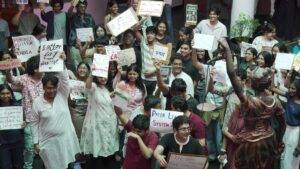
It is also noteworthy that the naming of the ‘Cockroach Janta Party’—a movement led by students and youth in India—stems from a remark made by the CJI, in which he referred to a section of society as ‘cockroaches.’ Against this backdrop, Abhijit Deepke, a native of Maharashtra who had studied abroad, launched a social media campaign under the banner of ‘Cockroach Janta Party’ alongside his associates. Within a few days, this initiative transformed into a full-fledged movement following the commencement of a sit-in protest at Delhi’s Jantar Mantar. The movement initially began with a demand for the resignation of Union Education Minister Dharmendra Pradhan, holding the central government accountable for the NEET paper leak and the subsequent suicides of several students. Students and youth were the first to join the cause. Neha Bora, President of the All India Students Association (AISA)—a student wing affiliated with a Left party—along with other student leaders, began an indefinite hunger strike at Jantar Mantar.
The ‘Cockroach Janta Party’ (CJP) movement gained further momentum when internationally acclaimed environmentalist and educator-engineer Sonam Wangchuk commenced an indefinite hunger strike. Several other celebrities, Leader of the Opposition in the Lok Sabha Rahul Gandhi, former Chief Minister of Delhi Arvind Kejriwal and various political figures also aligned themselves with the movement. Concurrently, the protesters announced plans to march to Parliament on July 20. Meanwhile , the police ( citing a High Court directions) forcibly removed Sonam Wangchuk from the site and admitted him to a hospital, where he was effectively held in custody. By this stage, the sit-in had evolved into a mass movement, drawing in a large segment of society; people began arriving from various parts of the country and even from abroad to participate. Number of visitors at the place was increasing day by day and even during night hours.
This movement was no longer limited to the NEET paper leak or demands for Dharmendra Pradhan’s resignation; it had expanded to encompass various issues regarding the education system and rising unemployment in India. People also started raising voices about corruption , hate politics and suppression of freedom of expression.As more people joined the CJP-led movement, the Jantar Mantar venue became a hub for voicing criticism against the Union Government’s failure to address these diverse issues. The administration failed to accurately gauge the public’s outrage and its potential impact. Initially, the entire administrative machinery—including the police—viewed the campaign as something confined to social media or a gathering of just a few thousand people; even by July 19, they had not correctly anticipated the scale of the events scheduled for the following day.
Consequently, preparations were made based on an expected turnout of only 8,000 to 10,000 people, with barricading, traffic arrangements, and force deployment planned accordingly. It was only when groups of people began streaming into New Delhi on the morning of July 20 that the authorities sprang into action—but it was already too late. There was very little time left to make proper law and order arrangements. To make matters worse, the Delhi Police leadership was entirely new; IPS officer Anurag Kumar had been handed command of the capital’s police force just three days prior, having spent the previous two decades in intelligence agencies, far removed from routine policing and law-and-order duties in Delhi. In this situation, something unfolded that no one had imagined.
Amidst makeshift planning, the police shut down internet services at the protest site and surrounding areas on the morning of July 20 and increased the police presence. Several companies of central police forces—specifically the CRPF’s anti-riot units—were called in. Despite this, the barricades began to fail, and the crowd swelled. Unable to stop even those going peacefully, the police force resorted to a lathi-charge. Plainclothes officers were assaulting people like street thugs. Even with the internet shut down, images showing the force brutally beating protesters began to go viral. Police personnel were beating even those people who were stumbling and fleeing—individuals whom they were merely supposed to disperse. Upon seeing these images, an outraged crowd headed towards New Delhi in large numbers. They were joined by people whose family members had gone to the protest site; consequently, the crowd swelled. Many were injured, and some—including police personnel—sustained severe injuries.