
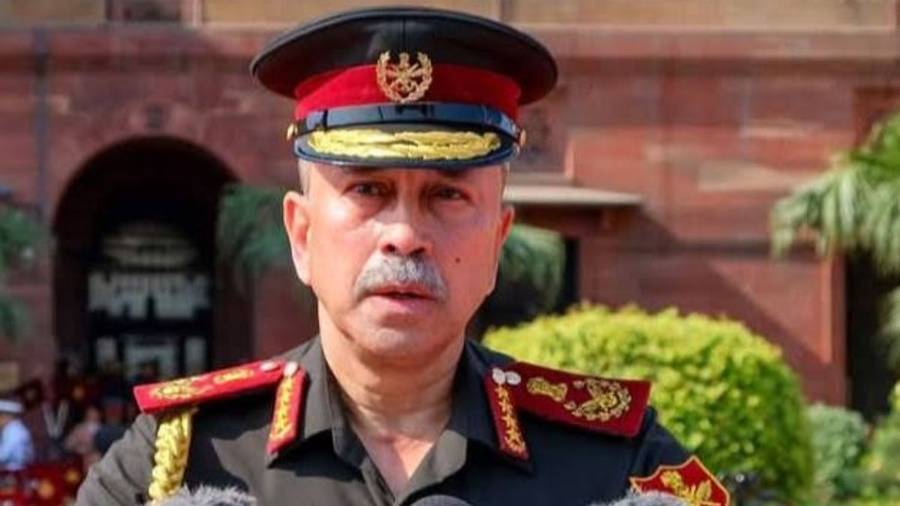
After four years, the Government of India has finally accepted the flaws in the Agnipath scheme, which was implemented in a hurry without proper deliberation. Defence Minister Rajnath Singh and India’s Chief of Defence Staff General N.S. Raja Subramani shared details about the changes made to this scheme for recruiting soldiers into the Indian Armed Forces.
Defence Minister Rajnath Singh announced on Wednesday that a meeting of the Union Cabinet, chaired by Prime Minister Narendra Modi, has approved a two-year additional service opportunity—a ‘second tour of duty’—for Agniveers. Terming the changes in this scheme, which faced criticism and opposition from the very beginning due to its flaws, as a reform, the Defence Minister even expressed gratitude to the Prime Minister. He stated that this decision will give Agniveers the opportunity to remain associated with the armed forces even after their initial service period.
According to Defence Minister Rajnath Singh, this decision is part of long-standing reforms in the military. Its objective is to make the army youthful, fit, technologically proficient, and ready for future challenges. He said, “This is not just a recruitment policy, but a pathway to prepare the Indian Army for the changing nature of warfare.”
Chief of Defence Staff General N.S. Raja Subramani described this as an important day for the Indian defence forces and the Agniveers. He said that when the Agnipath scheme was launched on June 14, 2022, it was mentioned that the performance of Agniveers would be continuously evaluated and the scheme reviewed periodically. Now, the first batch of Agniveers is close to completing four years, and their performance assessment has been positive.
He explained that earlier there was a provision to absorb 25 percent of Agniveers into the regular army based on merit and send the remaining 75 percent back to civilian life. Now, these 75 percent of Agniveers will get an additional two-year service opportunity. After this, those Agniveers who wish to join regular service will have to fulfill prescribed selection standards.