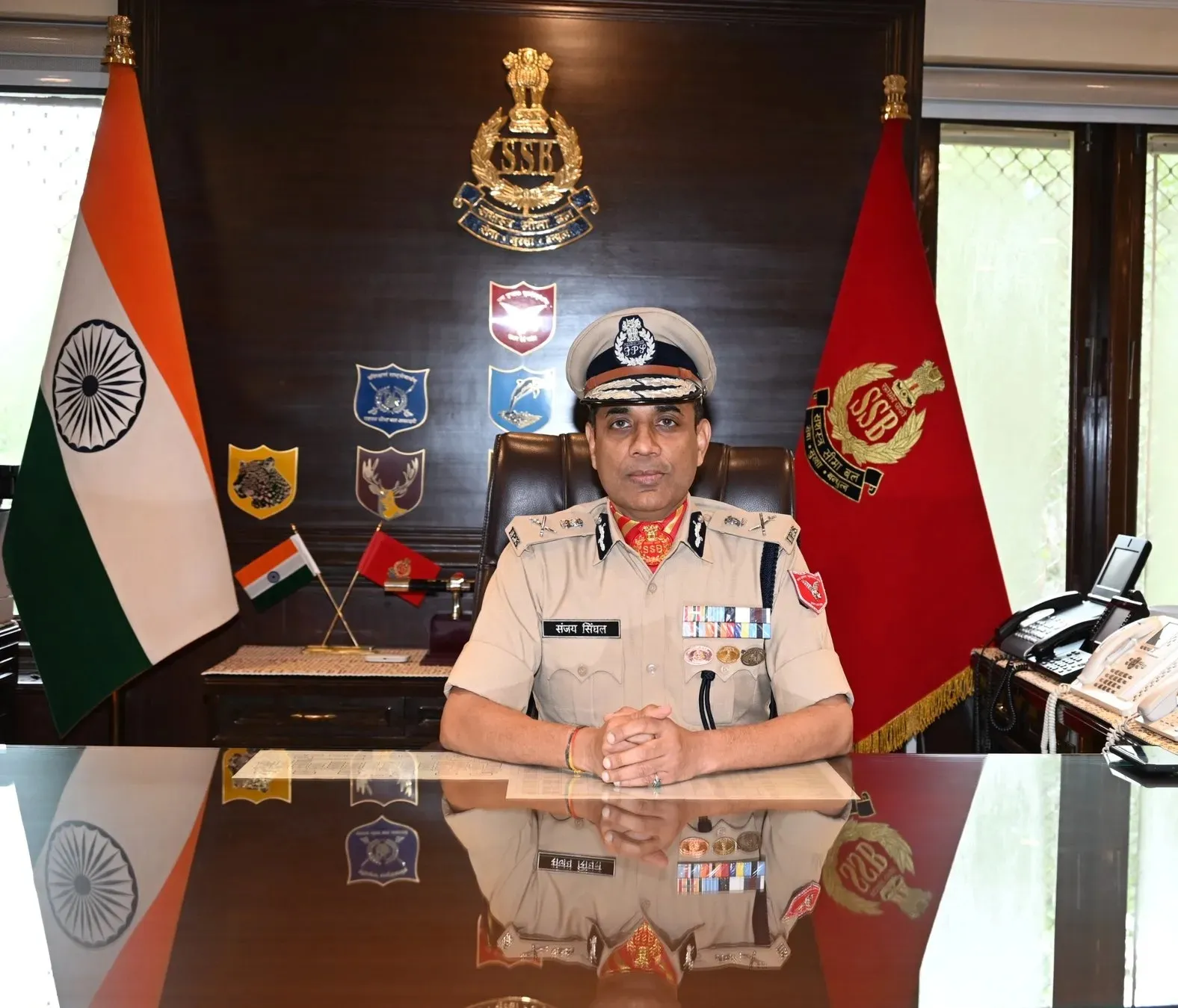
Now once again the same question arised because the Home Ministry has decided to give leadership of the force , as additional charge, to Indian Police Service officer Sanjay Singhal who is DG of Sashastra Seema Bal. The present Director General of ITBP Shatrujeet Kapur, who served a tenure of only nine and a half months, is going to retire on October 31, 2026. The position has not been filled by a full-time officer. Additional charge means temporary arrangement but in few cases such arrangement is extented for a longer period or converted into regular posting the same officer.
The ITBP, which currently has a strength of approximately 90,000 personnel, secures the 3,488-kilometer-long India-China border, stretching from the Karakoram Pass in Ladakh to Jachep La in Arunachal Pradesh. Established about 62 years ago, the ITBP serves as the specialized border-guarding agency for this region. The situation demands that the Indo-Tibetan Border Police (ITBP)—tasked with guarding the India-China border—be further strengthened. A plan is currently underway to this end, with a proposed expenditure of approximately ₹400 crore. A significant portion of these funds will be allocated toward upgrading forward outposts and investing in drone and anti-drone technologies. Following the loss of 20 soldiers in the Galwan Valley clashes, one of the measures taken by India has been the creation of ‘Shaurya Commando’ units within the ITBP. It is, however, concerning that the appointment of leadership for such a critical border force appears to be treated with a lack of seriousness.
Just a few days ago, while speaking at an event in Alwar, Rajasthan—held to mark the formation of the ITBP’s ‘Shaurya Commando’ units—Shatrujit Kapur referred to the escalating tensions along the India-China border in Arunachal Pradesh, driven by the activities of the Chinese military, and noted that the situation remains ongoing. This happened around the time Chinese President Xi Jinping was in New Delhi for the BRICS summit in mid-September. The opposition Congress party targeted the government over this statement, compelling the Ministry of External Affairs to issue a clarification. The government has stated that, at times, changes in the routes or methods of border patrolling can lead to problematic situations; however, such issues are typically resolved through diplomatic or military channels.
Nevertheless, the frequent turnover of Directors General (DGs) in Central Armed Police Forces—specifically the ITBP and the Sashastra Seema Bal (SSB)—is not a new phenomenon. Over the last decade, the leadership of the ITBP has changed nine times. With the exception of S.S. Deswal, no other DG commanded the force for even two consecutive years. Before Shatrujit Kapur, Praveen Kumar served as the ITBP’s DG for only four months. During this same ten-year period, the ITBP even had a DG whose tenure lasted just two months—IPS officer Dr. Sujoy Lal Thaosen, who served as the Director General from August 1 to October 2, 2022. One can easily gauge the level of seriousness—or lack thereof—with which the Ministry of Home Affairs approaches the tenure of officers appointed to lead this force.
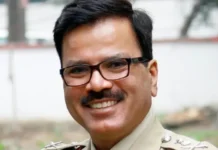
Sanjay Singhal, a 1993-batch Indian Police Service (IPS) officer of the Uttar Pradesh cadre—who currently serves as the Director General of the Sashastra Seema Bal (SSB)—has now been given additional charge as the Director General of the ITBP. The SSB was established in 1963, one year after the ITBP. As the name suggests, it is a specialized police force tasked with guarding border regions—specifically the frontiers with Nepal and Bhutan. Its personnel strength is slightly larger than that of the ITBP, numbering approximately one lakh. Sanjay Singhal assumed the position of Director General (DG) of the SSB on September 1, 2025—meaning it has been exactly one year since he took on this assignment—and he has now been entrusted with the charge of another equally large force. In effect, his workload has doubled. Barring any extension to his tenure, he is set to retire in December 2028.
This also raises the question: since the retirement date for every officer is already fixed, why is the successor for the head of a force not determined well before the incumbent’s retirement? Furthermore, is it even possible for any officer — within a tenure of just a few months—to truly grasp the operational workings, the character, and the area of responsibility of a force, while simultaneously building a rapport with its personnel and providing effective, honest leadership? And also that while bearing the responsibility for not just one, but two separate organizations! This aspect raises questions regarding both the competence and the intentions of the policymakers and those tasked with the management of these forces.