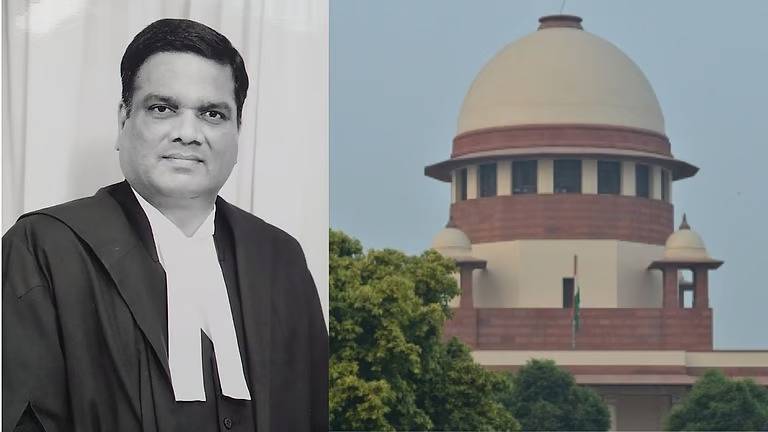
Besides Justice R Subhash Reddy, the committee will have former Punjab and Haryana High Court Chief Justice Ravi Shankar Jha, former Delhi High Court Justice Shalinder Kaur, former Director of Central Bureau of Investigation Rishi Kumar Shukla and former Director General of Meghalaya Police LR Bishnoi as its members.
The order constituting the HPEC was passed by a bench of Chief Justice of India (CJI) Surya Kant, Justice Joymalya Bagchi and Justice V Mohana on August 18 and came to be published on the Supreme Court website on Thursday, August 20.
Committee’s task:
The committee has been entrusted with the task of fact-finding on various aspects raised in connection with the CJP protests.
The Supreme Court has recommended that the HPEC prioritise examination of alleged police excesses as well as protest violence as well as allegations of harassment and molestation of women protestors.
Additionally, the HPEC may also examine issues pertaining to the grant of interim compensation to those injured on either side, whether police personnel or protestors, the Court added.
The Court recorded that both petitioners (those seeking guidelines to curb police excesses against protestors) as well respondent-authorities, had given various suggestions on the remit of the HPEC.
The Court added that the panel’s work will not be a one-time exercise, but a continuous and periodic assessment of the flagged issues.
“(The HPEC) shall submit its interim findings periodically so as to enable this Court to take appropriate measures and issue such directions as may be warranted,” the Court said.
Deposit all cam footage :
The Court also directed that CCTV footage of the protests and body camera footage from police or security personnel that were earlier directed to be preserved must be handed over to the HPEC.
No bar on taking action against erring personnel:
Notably, the Court also made it clear that errant police officers can face departmental action independent of the committee’s findings.
“The constitution of the HPEC by us shall in no way deter or debar the police authorities or other security forces from taking administrative or disciplinary action against such of their officers as may be found to be in contravention of the rules governing their conduct,” the order said.
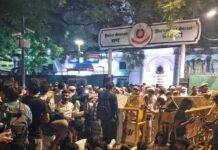
The Court passed the order on a batch of petitions concerning police brutality during protests at Jantar Mantar and in Bihar and other parts of the country over alleged paper leaks of NEET and other examinations.
The petitioners moved the Court seeking pan-India guidelines to ensure that peaceful protests are allowed.
Some petitions also sought action against protesters accused of assaulting police personnel during the demonstrations.
The protests had begun in June on a call by Abhijit Deepke , the founder of CJP, against repeated question paper leaks. CJP demanded the resignation of Union Education Minister Dharmendra Pradhan, who has since resigned from the position.
The protests gained momentum after climate activist Sonam Wangchuk joined and started a hunger strike in solidarity. All India Students Association, a left party student’s wing, also joined the movement. AISA President Neha Bora and other student leaders started fast unto death. Sonam Wangchuk was later removed from the protest site and taken to a hospital by the Delhi Police, citing his worsening health condition. He ended his 26-day hunger strike at Medanta Hospital late on July 23.
Meanwhile, Delhi Police and the Rapid Action Force (RAF) reportedly restored to lathi charge, teargas shelling and the use of pellet guns to stop the CJP protestors on a “Sansad Chalo” march to the Parliament on July 20.
Pradhan eventually tendered his resignation as minister on July 25 and the protests were called off.
( input courtesy: Bar and Bench )