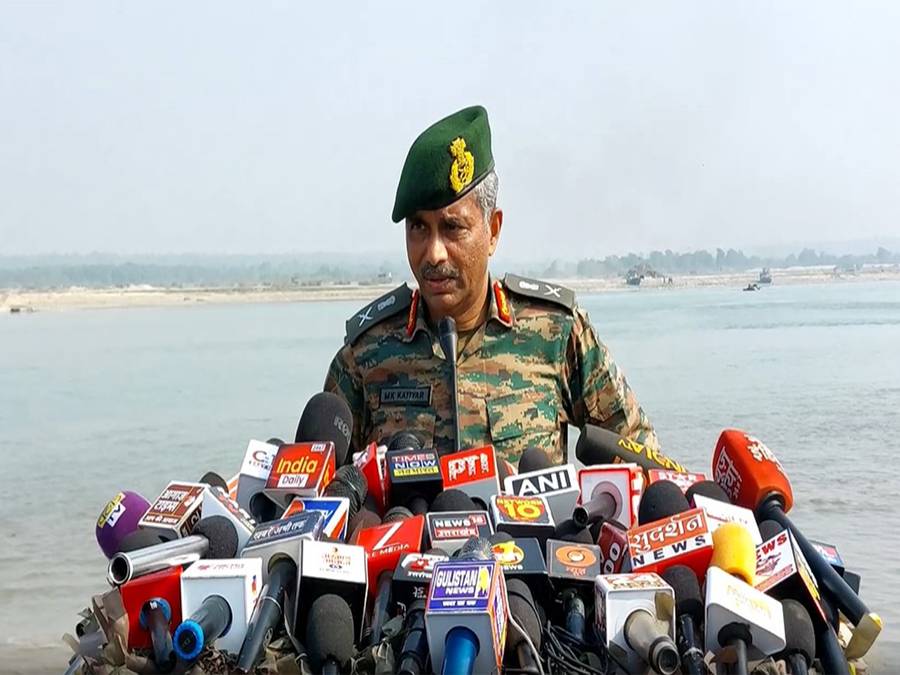
Chief of the Indian Army’s Western Command Lieutenant General Manoj Kumar Katiyar, warned Pakistan that the Indian Army will not be intimidated by nuclear threats. He stated that the ground outcome of any future conflict will be decisive.
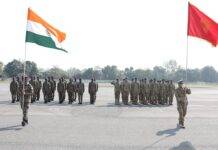
Lieutenant General Manoj Kumar Katiyar was addressing soldiers during an operational demonstration held today at the Dhyan Chand Stadium at Mamun Military Station in Pathankot, as part of the command’s investiture ceremony. He said that during Operation Sindoor, Pakistan tried very hard to force a ceasefire by issuing nuclear threats.
Lieutenant General Katiyar said that if they lost, they would take half the world with them. During Operation Sindoor, we ignored their nuclear threats. This time, we are better prepared than before, and we have a clear plan for the future.
General Katiyar also claimed that the Pakistani military is maintaining a “war-like situation” there to maintain its relevance among the people.
He alleged, “Our country’s leadership is committed to the welfare of the country and its citizens, but their leadership is driven only by their own selfish needs. Maintaining power and remaining relevant… Their relevance comes from constant conflict with India.” Lieutenant General Katiyar said that Pakistan has neither the courage nor the strength to fight an open combat with India, and has resorted to proxy war to respond.
He said that Pakistan has repeatedly provoked India through its terrorist groups, so that when we retaliate, it becomes a war-like situation and they get the support of their people.
Lieutenant General Manoj Kumar Katiyar alleged that Pakistan has misled its own people by creating a false narrative of victory. “They spread lies in the media and deceived their people to make their general a Field Marshal. This time, we will not give them such an opportunity,” Lt. Gen. Katiyar asserted. He stressed that future success will not be limited to destroying bases or posts. He said, “It will be so decisive that they will be brought to their knees and will have to admit their defeat before the world.”
After the ceremony , while speaking to media persons, Lieutenant General Manoj Katiyar said, “As you have seen, all parameters of terrorism in Jammu and Kashmir have steadily declined. The situation in Jammu and Kashmir has become very normal. However, as I said earlier, this is a deliberate conspiracy by Pakistan to send in some terrorists to vitiate the atmosphere. Our military and all departments of the civil administration are fully prepared to deal with it.”
Responding to a question about the re-establishment of terrorist launch pads and terrorist camps in Pakistan, he said that the army is closely monitoring it. He said, “If they are trying to rebuild or re-establish terrorist camps and bases, we have that information. We will formulate our plans accordingly.”
When asked whether there would be another retaliatory strike like Operation Sindoor, Lieutenant General Katiyar said that Pakistan has been taught a strong lesson during Operation Sindoor. And if there is any new provocation, India will respond even more strongly. Katiyar said, “Our response in Operation Sindoor was very clear. We did not target any civilian areas. Initially, we targeted only terrorist hideouts, but when Pakistan attacked our military installations, we responded by attacking their military installations and airbases. The aim was to quickly eliminate terrorist hideouts.”
He said, “Our preparations are ongoing, and we must remain prepared. If they do not learn this lesson and, for their own internal reasons, create a situation of war again, we will respond in an even stronger and more forceful manner.”
On Pakistan’s claims of seeking a ceasefire through other countries and foreign mediation, Lt Gen Katiyar said, “After the attack on May 7, 2025, our Director General of Military Operations told them that we had completed our action and wanted to talk. They refused at that time. The fighting continued for the next 88 hours. After their military installations suffered heavy damage, their DGMO contacted our DGMO, and a ceasefire was drafted during that conversation. After the conversation, our government accepted the request.