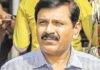
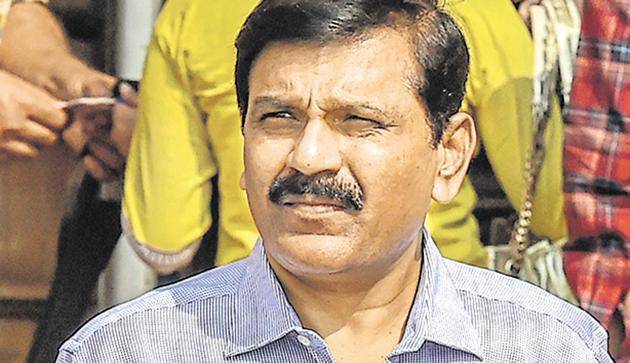
The government had entrusted Nageshwar Rao with the charge of the Central Bureau of Investigation (CBI),India’s premier investigative agency, as its interim Director during a period of intense controversy. Prior to this, he had been on deputation to the CBI since 2016, serving as a Joint Director. This was in 2018. It was widely speculated that Rao, who became the agency’s temporary head amidst the corruption-related conflict between the then CBI Chief Alok Verma and Special Director Rakesh Asthana, would be retained in the position but somehow, he was removed and relieved of his duties after a tenure of 103 days.
Rao hails from Mangapet village in the Warangal district of Telangana. He completed his post-graduation at Osmania University. Before joining the IPS in 1986, Mr. Rao did research at IIT Madras.
According to a news agency report, while announcing his entry into politics, Rao stated that his experience in public administration had convinced him that the reconstruction of India cannot be limited merely to administrative reforms. He remarked that the country should move towards modern development while remaining connected to its civilizational roots. He added that the ‘Sanatan’ perspective of his party, the Sarvajan Sanatan Party (SSP), extends far beyond modes of worship; it represents a way of life grounded in truth, Dharma (righteousness), duty, compassion, justice, self-control, nature, family, society, and public welfare.
He maintains that the SSP’s stated vision rests on four key pillars: education, health, livelihood, and reconnection with civilizational roots.