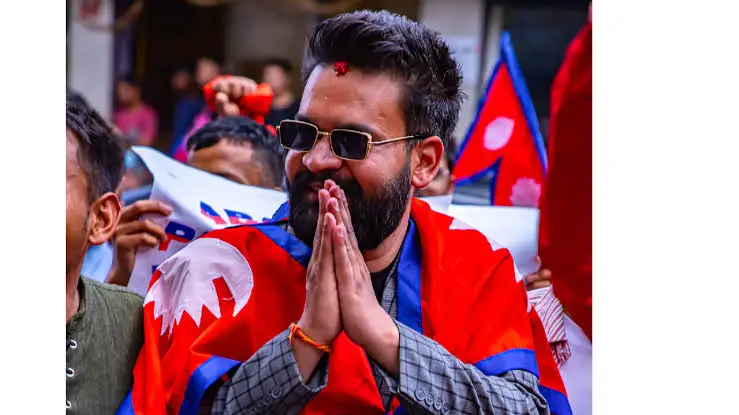
Balendra Shah, popularly known as ‘Balen,’ released a song filled with optimism regarding the future of his country just before assuming the office of Prime Minister of Nepal on Friday.
“Undivided Nepalis, history is being made this time,” he rapped in a track that garnered over two million views within just a few hours of its release. The song serves as a nostalgic reminder of his ‘underground rap’ days, during which he used music as a medium to expose corruption and other social ills plaguing Nepal.
After serving just three years as the Mayor of the capital, Kathmandu, Shah joined forces with the ‘Rastriya Swatantra Party’ (RSP) and became its prime ministerial candidate. He secured a decisive victory in the general elections held earlier this month.
Balen’s supporters view him as a symbol of change and a vehicle for breaking free from the failures of Nepal’s old guard of politicians. Conversely, some observers question whether the four-year-old RSP will be capable of fulfilling its ambitious promises.
Shah was born in 1990 in Naradevi, Kathmandu, and is the youngest son of his parents. His father is an Ayurvedic physician, while his mother is a homemaker. Shah is married and lives with his wife and daughter.
After completing his schooling, he earned an engineering degree—first from Kathmandu and later from the southern Indian state of Karnataka.
In 2013, he rose to overnight fame after winning a popular ‘rap battle’ in Nepal, his biting lyrics reflected the frustration of a generation that felt oppressed and neglected.
Shah subsequently released several popular songs that criticized the rampant corruption and social inequality prevailing in Nepal. Sporting his signature square-framed black glasses, a black blazer, and black trousers, he cut a distinct and striking figure in his music videos.
One of his most famous songs, ‘Balidan’ (Sacrifice), has garnered over 14 million views on YouTube. In 2022, this political newcomer won the election for Mayor of Kathmandu by a landslide as an independent candidate. He defeated political parties that had dominated the local electoral landscape for decades.
His tenure as mayor was marked by efforts to improve urban sanitation, preserve local heritage, and crack down on corruption. He also launched a controversial campaign to bulldoze illegal structures—a move that helped alleviate traffic congestion to some extent but also drew criticism from street vendors and residents of informal settlements.